
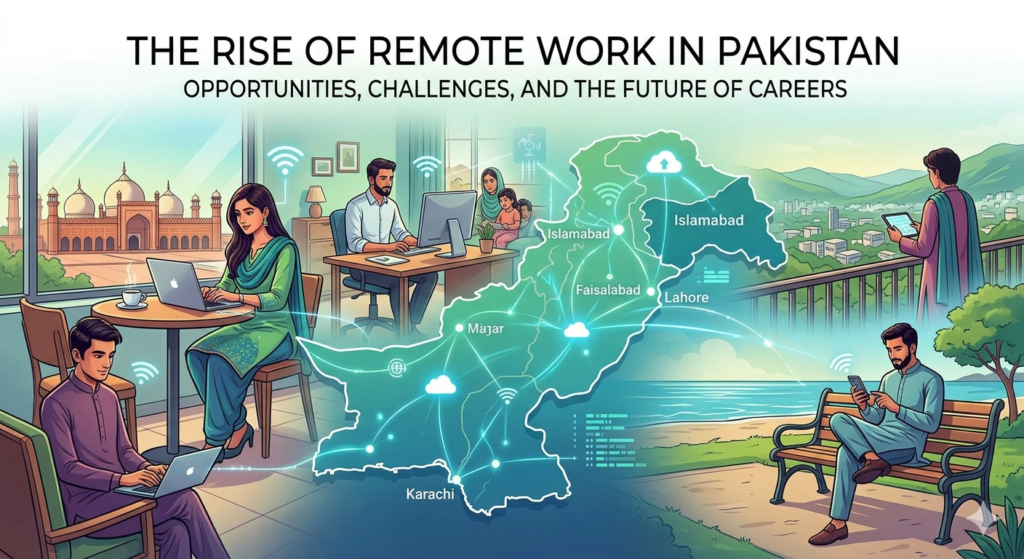
Rise of Remote Work in Pakistan: Opportunities, Challenges, and the Future of Careers
Over the past decade, the world of work has undergone a dramatic transformation. Remote work, once considered a luxury or a niche arrangement, has now become a mainstream option for millions of professionals globally. In Pakistan, this shift is redefining the traditional 9-to-5 office model, opening doors for individuals and businesses alike, but it also comes with its own set of challenges.
What is Remote Work?
Remote work, also known as telecommuting or work-from-home, allows employees to perform their job duties outside a traditional office environment. Thanks to technology, workers can communicate, collaborate, and deliver results from anywhere with an internet connection. In Pakistan, remote work is gaining popularity in sectors like IT, digital marketing, content writing, graphic design, customer service, and e-commerce.
Opportunities Offered by Remote Work
Flexibility and Work-Life Balance Remote work allows employees to create a schedule that fits their lifestyle. This flexibility reduces commuting stress and provides more time for family, hobbies, or skill development, which contributes to improved productivity and overall well-being. Access to Global Job Markets Pakistani professionals are no longer limited to local employment. Platforms like Upwork, Fiverr, Toptal, and Remote.co have enabled skilled individuals to work with international clients, earning in foreign currencies and gaining global exposure. Cost Efficiency for Employers and Employees Businesses save on office space, utilities, and overhead costs, while employees save money on transportation, meals, and work attire. This mutual benefit makes remote work an attractive model for both startups and established companies. Promotes Digital Skill Development Remote work encourages professionals to learn new digital tools, software, and online collaboration platforms, enhancing their employability and adaptability in an increasingly digital world.
Challenges of Remote Work in Pakistan
Connectivity and Infrastructure Limitations While major cities like Karachi, Lahore, and Islamabad generally have reliable internet, rural areas face connectivity issues that hinder remote work opportunities. Ensuring stable broadband access is crucial for expanding remote work nationwide. Communication and Collaboration Remote teams may struggle with miscommunication or delayed feedback. Without face-to-face interaction, building teamwork, managing projects, and maintaining company culture can be challenging. Tools like Zoom, Slack, Trello, and Microsoft Teams are essential to bridge this gap. Work-Life Boundary Management Remote work blurs the line between personal and professional life. Employees may face burnout if they don’t manage schedules, set boundaries, or separate workspaces from personal spaces. Job Security Concerns Some professionals worry about job stability and career growth when working remotely, especially in organizations that lack a structured remote work policy.
Industries Benefiting from Remote Work in Pakistan
IT & Software Development: Programmers, developers, and software engineers can work for international clients. Digital Marketing: Social media managers, SEO experts, and content marketers are in high demand. Creative Fields: Graphic designers, video editors, and writers can work remotely for local or global clients. Customer Service & Support: Call centers and support teams are increasingly operating online. Education & Online Tutoring: Teachers and trainers are offering online courses and e-learning solutions.
Future of Remote Work in Pakistan
Remote work is not a passing trend—it is shaping the future of careers in Pakistan. The government and private sector are beginning to recognize its potential:
Training Programs: Digital skill courses and freelancing workshops are becoming more common. Hybrid Work Models: Companies are combining in-office and remote work to maximize efficiency. Global Competitiveness: Skilled Pakistani professionals can compete with talent worldwide, bringing in foreign income and boosting the economy.
Experts predict that remote work will continue to expand, offering more opportunities for women, students, and professionals in smaller cities who previously had limited job options.
Tips for Successful Remote Work
Invest in a Reliable Internet Connection Create a Dedicated Workspace Maintain a Structured Routine Use Collaboration Tools Effectively Prioritize Continuous Learning Set Clear Work-Life Boundaries
Conclusion
Remote work in Pakistan is revolutionizing the labor market. It provides unmatched opportunities for financial independence, professional growth, and global exposure. However, it requires discipline, digital literacy, and strong communication skills to overcome its challenges. Those who adapt early will be better positioned to thrive in a modern, flexible work environment.
